
Summary: A three-pronged approach to organizational analysis consists of clinical analysis, operational analysis and financial analysis. Find out how these approaches link together to provide holistic results.
 In order to achieve optimal results and maximize profitability for a healthcare organization, a three-pronged approach to organizational analysis is necessary. As a starting point, it is critical to determine where your organization is in terms of key metrics. This can be achieved through an in-depth SWOT analysis which consists of determining your organization’s strengths, weaknesses, opportunities and threats.
Healthcare, in particular, is a complex industry laden with constantly changing legislation. Remaining profitable and competitive under such circumstances can be challenging. A three-pronged approach to organizational analysis includes operational, clinical, and financial analyses to be performed in conjunction with one another to maximize revenue, reduce costs, and improve the quality of healthcare.
Financial Analysis
Healthcare Reform has brought about many changes in regard to how organizations function from a financial perspective. New payment methods have been introduced such as bundled payments, Managed Care Organizations, and Accountable Care Organizations. Reimbursement has been reduced through Medicare. Medicaid is in the process of massive expansion. Changes are occurring in coding such as transitioning to ICD-10 from ICD-9. E&M coding has become a new buzz word, ensuring that coding reflects the proper level of care both provided and allowed. Contract negotiations are becoming critical to make sure the best possible rates are obtained. Denial management and revenue cycle are certainly areas to concentrate upon to ensure maximum profitability.
Operational Analysis
 From an operational perspective, how do you stack up against your competition? What are your step-by-step processes? How can additional efficiencies be achieved? How are you complying with healthcare reform requirements? Have you performed a gap analysis to make sure all reform processes are in place? Have you looked at your organization from a risk perspective? What about insourcing versus outsourcing opportunities? Do you have areas which would benefit from one versus the other? When is the last time you reviewed your policies and procedures? Are they written clearly and concisely? Are they all still relevant? Are others needed? From an information technology and infrastructure perspective, where do you stand? Is the right information available to the right people in the right format? Is the information pertinent, relevant, accurate, and valid?
Clinical Analysis
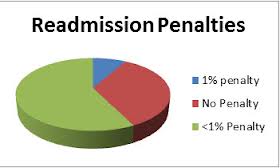
 The clinical focus has shifted to improved quality and reduced costs. What are you doing to reduce your readmissions rates? Are you prepared to face the penalties if your rates are deemed to be too high? Reimbursement is shifting from volume to value and from quantity to quality. Have you made this shift throughout your entire organization? Patient satisfaction is a key component and used as a key performance indicator. Customers have the choice to utilize any provider they so choose and are becoming quite astute in comparing patient satisfaction scores to make an educated selection. Excellent customer service has now become the norm. The “wow” effect has become standard. What are you doing to “wow” your customers? Clinical pathways are becoming prevalent. Have you standardized and publicized your clinical pathways? Are there areas in which processes can become more efficient and/or streamlined? Have you reviewed your utilization management plans to make sure they are optimized? Have you performed an analysis on length of stay by payer source to ensure maximum reimbursement?
Putting it all Together
 Each of the three prongs can certainly be analyzed separately and at different time intervals, but the key to maximizing profitability, sustainability, and viability is to analyze your organization from top to bottom from operational, financial, and clinical perspectives. Your desired outcomes will be achieved and in many instances exceeded through establishing and monitoring short, intermediate, and long-term strategic goals and expectations.
To view BHM Healthcare Solutions’ organizational analysis offerings, please refer to the following pages:
CARF Services
- Behavior health
- Psychosocial rehabilitation
- Rehabilitation
- Child and Youth Services
- Employment and community services
- Medical rehabilitation
- Opioid treatment
Who Does CARF Accredit?
- Aging services
- Behavioral Health
- Child and Youth
- Durable Medical Equipment, Prosthetics, Orthotics and Supplies
- Employment and Community Services
- Medical Rehabilitation
- Opioid Treatment Programs
- Vision Rehabilitation Services
Steps to Accreditation
- Do a self-evaluation of your facility. Pretend that you are the accreditation team and look at every process in your organization, keeping your eyes open to changes in workflows.
- When you’ve finished an internal review, make changes to efficiencies, safety or anything else that came up during your review.
- Request an on-site survey from CARF. Ideally, anything that they find will be new to you, assuming you were able to fix or improve what was uncovered during your internal review.
- Review the results of your survey. The results will include a written review of your services, including areas of strength and places that need improvement. If your organization has achieved the strict standards outlined by CARF, you’ll receive accreditation. If not, you now have a written report outlining the changes you need to make to be eligible, so, you can start the process over again.
CARF Accreditation is awarded in several forms:
- Three-Year: A “full accreditation” where the organization has proven that they meet or even exceeds the standards of accreditation.
- One-Year: The organization still has some work to do to improve services, but they have demonstrated the willingness and resources to implement these changes, so they are still awarded a certification conditionally.
- Provisional: After the One-Year accreditation has expired; the organization will be reviewed for a potential Three-Year accreditation. If they have not made the necessary improvements to advance, they will become non-accredited.
- Nonaccreditation: The organization has major changes to make and is not yet ready to receive and uphold accreditation.
The CARF Difference
The CARF website does an excellent job of displaying the benefits of CARF accreditation. They conducted a study that showed, longitudinally, the difference that CARF accreditation made to the organizations it certified. From the time of their first survey compared to the most recent survey, CARF accredited programs:-
Had a 26% increase in patients served
-
Had a 37% increase in conformance to quality standards
-
Had a 37% increase in annual budget dollars